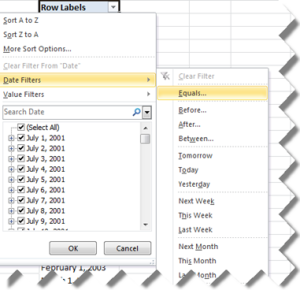
[View:https://prologika.com/CS/cfs-file.ashx/__key/CommunityServer.Blogs.Components.WeblogFiles/blog/2308.AdventureWorks.zip:550:0]If you have experience with multidimensional cubes, you know that most cubes have a Date dimension grained at a day level. If the fact table has multiple date keys, you can join the Date dimension multiple times to the measure group so the Date dimension can play multiple roles (a role-playing dimension), such as OrderDate, ShipDate, and DueDate. If you use Excel pivot reports connected…
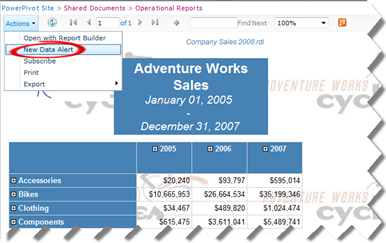
SQL Server 2012 introduces a Reporting Services feature called Data Alerts. Data alerts notify a selected list of recipients about data changes on the report. Behind the scenes, data alerts use the report data feeds feature which was introduced in SQL Server 2008 R2. Consequently, similar to subscriptions, data alerts run in the background and poll the reports for changes. For more information about the…
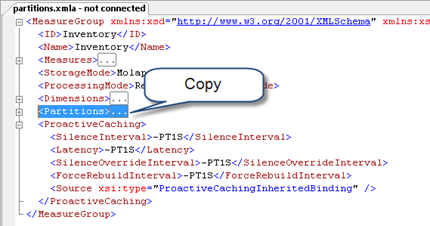
Today happens to be my birthday. To reverse the tradition, how about I give you a gift? If you find yourself spending hours creating partitions in BIDS, you might find the Partition Generator sample (requires registration at the Prologika website) useful. Often, I partition larger cubes by month which may require creating quite a few partitions. Not only is this time-consuming and tedious, but is…
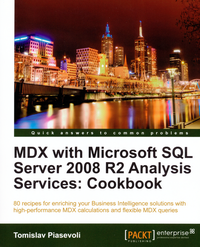
MDX is the query language for multidimensional cubes. Many BI practitioners perceive MDX to have a high learning curve probably not that much for the language itself but for the multidimensional concepts you need to master before you can get something out of it. When interacting with the community, I am frequently asked to recommend a MDX book. So far, my recommendations have been Microsoft…
Disabling check constraints, such as foreign key constraints, is often required when populating a data warehouse. For example, you might want to disable a check constraint to speed up loading of a fact table. How do we disable check constraints in SQL Server? You can script each check constraint or you can use the undocumented sp_MSforeachtable function. ALTER TABLE [dbo].[FACT_ITEM_INVENTORY] NOCHECK CONSTRAINT [FK_DIM_DATE_FACT_ITEM_INVENTORY_Date_Id] -- disables…
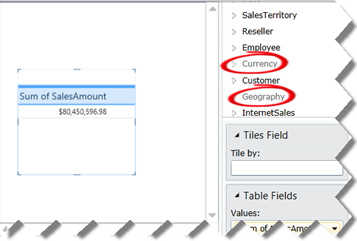
Similar to Report Builder models (now obsolete), Power View (formerly known as Crescent) filters metadata automatically. The reasoning behind this feature is that the tool should guide the user to choose only tables that are related to the ones used on the report to avoid Cartesian joins. For example, if the user has selected Sales Amount from the Reseller Sales table, Power Pivot automatically disables…